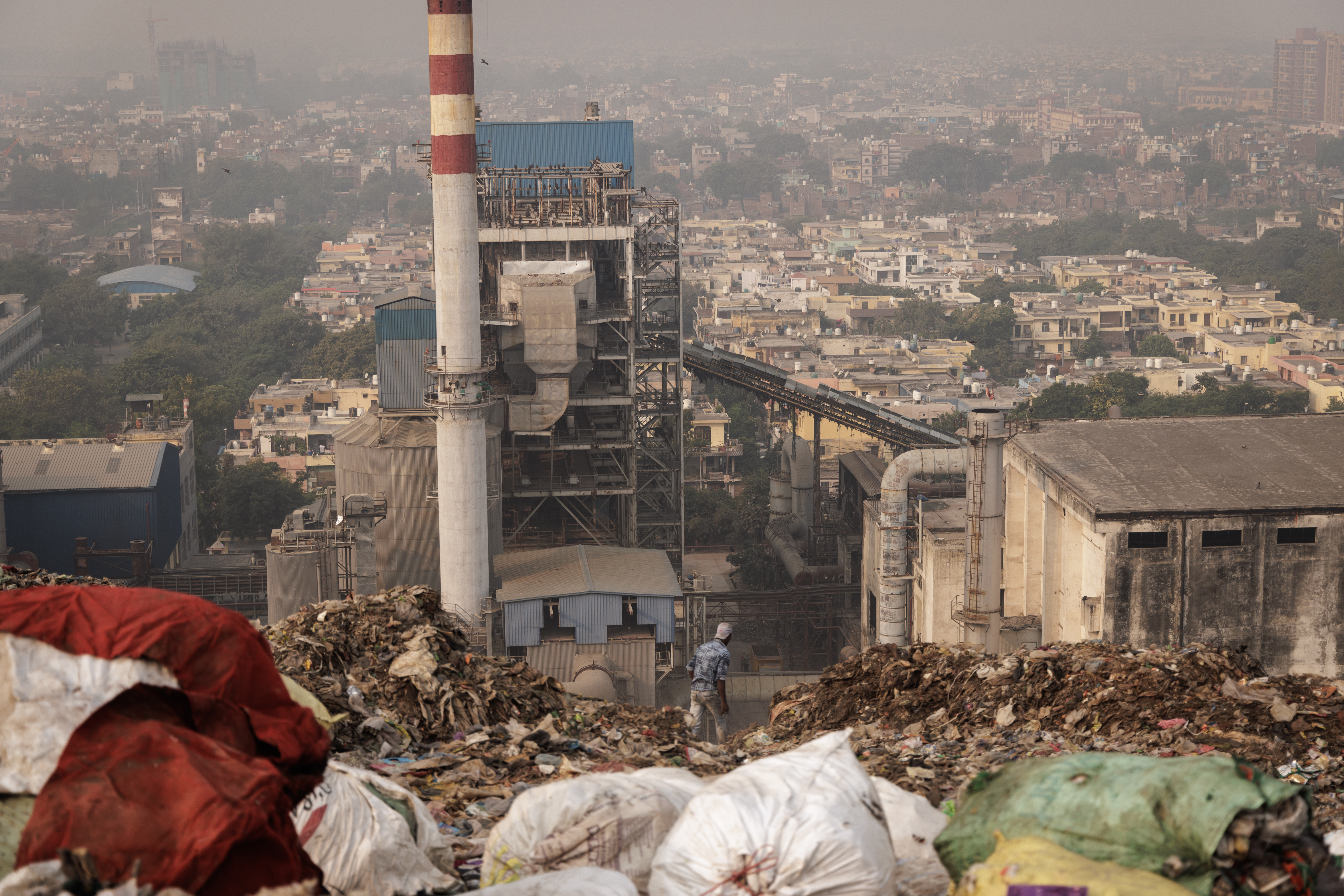
On the outskirts of east Delhi, a mountain of garbage rises higher than the Taj Mahal. Ghazipur is one of three massive landfills ringing the capital. Every day, more than two thousand tons of fresh waste arrive. The mountain keeps climbing.
Getting in required a fixer. Access to the landfill is controlled, semi-official, and not something you walk into with cameras visible. The agreement was simple: get in, get to the top, and hide the cameras on the way down.
The road in gives you the first warning. Trucks idle in a haze of dust and diesel, stacked with waste heading toward the base. Motorbikes weave between them. Cows stand in the road, unbothered. The air is already thick — a yellow-brown weight that sits in the chest before you've taken ten steps.
Delhi's air in late October is already dangerous. Annual stubble burning across the northern plains sends smoke drifting south. A cold front from Kashmir pins it low over the city, trapping it beneath a thermal lid. Layer in the exhaust from Diwali fireworks, and the result is a toxic inversion that settles over the capital for weeks. At ground level, it stings. At the top of Ghazipur, it concentrates.
The surface shifts underfoot — compressed plastic, rotting organic matter, shards of metal and glass buried in layers of compacted sludge. As the bulldozers push through fresh material, a low smoke breathes out from the mountain itself — methane and decomposition escaping from beneath the surface. The air thickens. The smell is something you carry home.
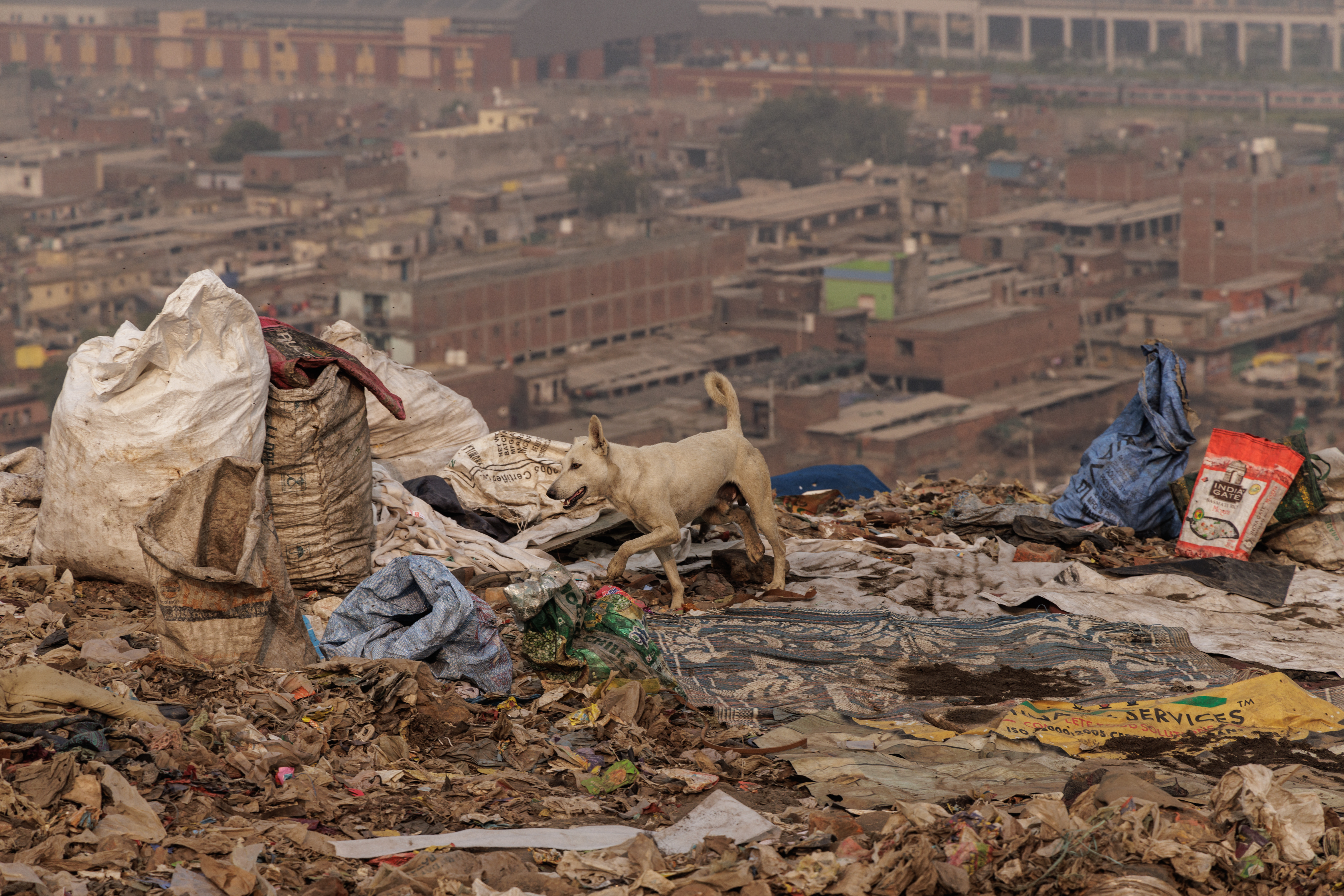
At the summit, the city stretches out in every direction, blurred by haze. The skyline of east Delhi sits below — apartment blocks, rail lines, the brick neighborhoods of the colony pressed right against the base of the landfill. From up here, the waste plant's smokestack and conveyor belt stand at eye level. A lone figure walks the ridge between mounds of refuse, silhouetted against the smog.
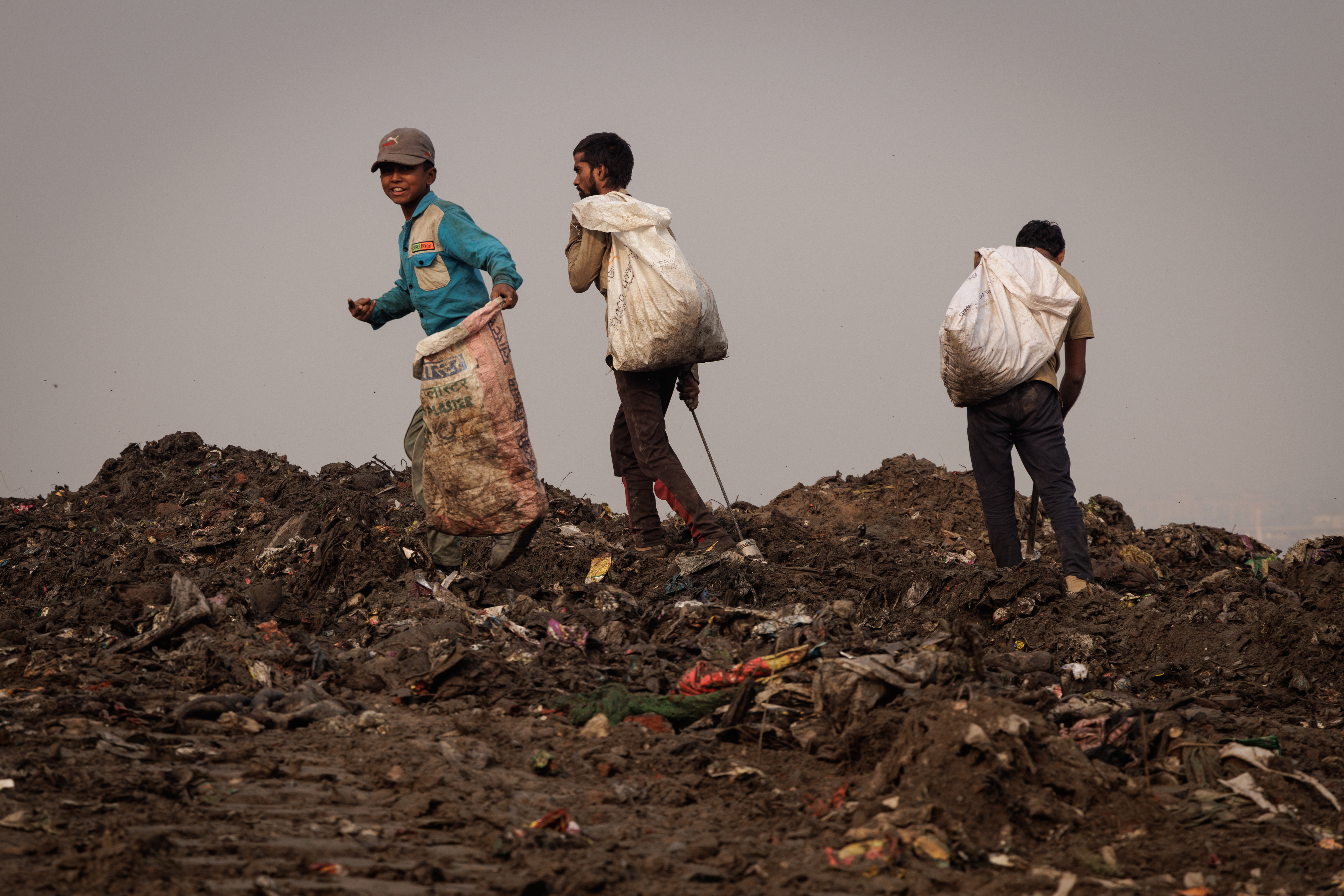
A full day's work fills a few bags. It earns them roughly a dollar.
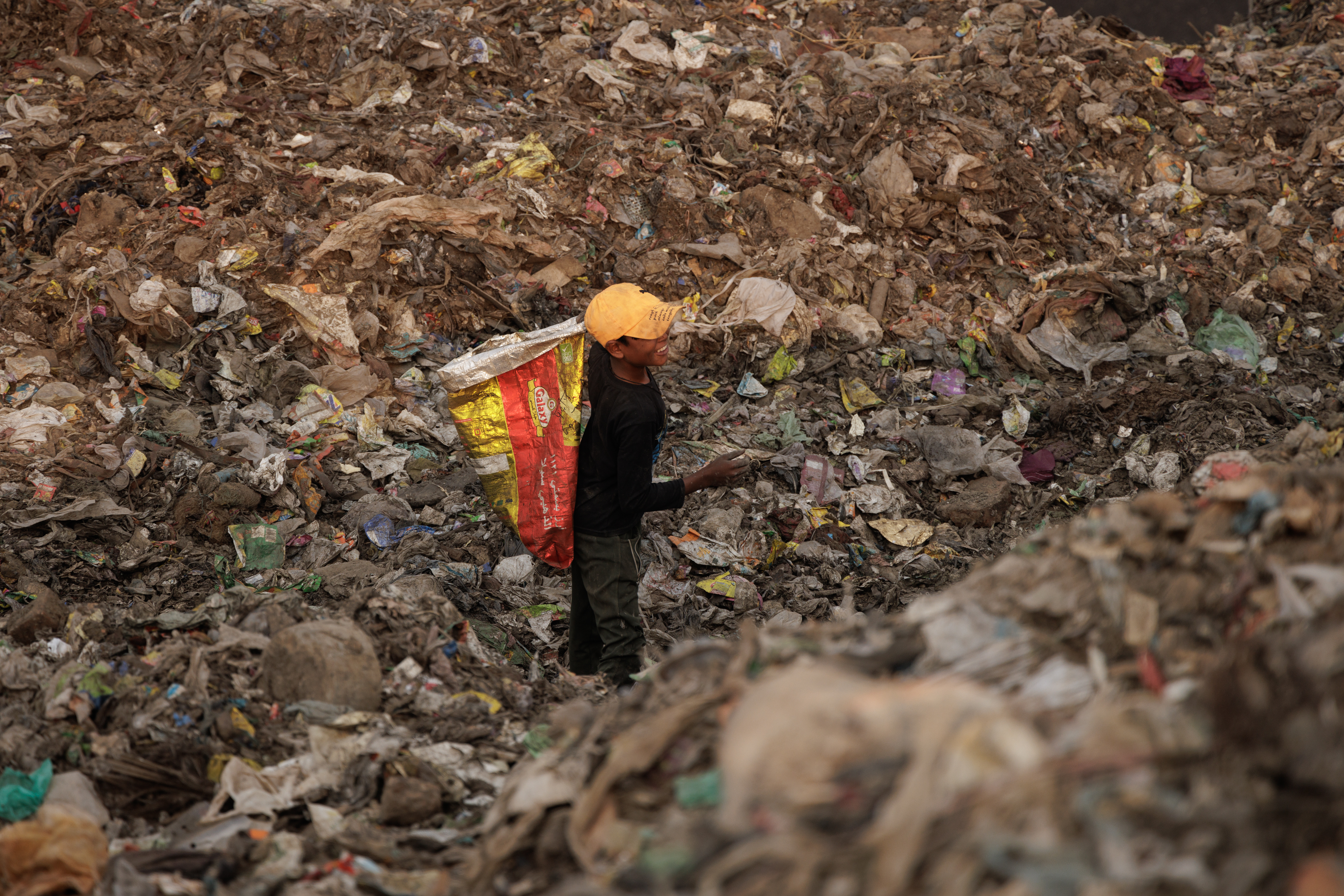
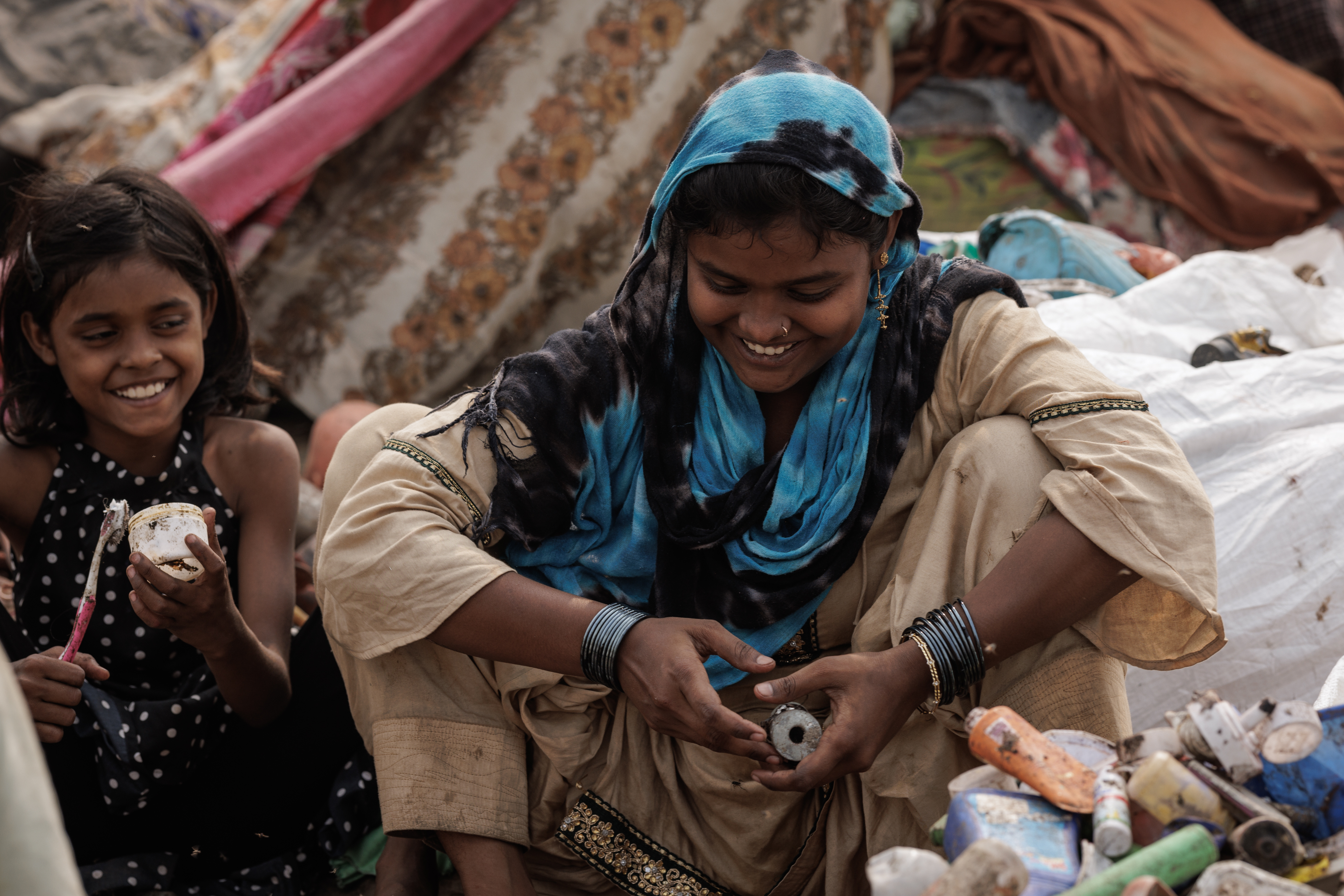
Children and adults climb the slopes each morning from the colony below to pick through the waste. A full day's work fills a few bags — recyclables sorted by hand from the mass of refuse. It earns them roughly a dollar.
There is a certain panic on the mountain. The children who pick here know they are not supposed to be seen. They work quickly, heads down, filling bags as fast as they can before moving on. When they notice you watching, some freeze. Others smile — brief, uncertain — and keep moving. The fear of being caught is constant, layered on top of the work itself.
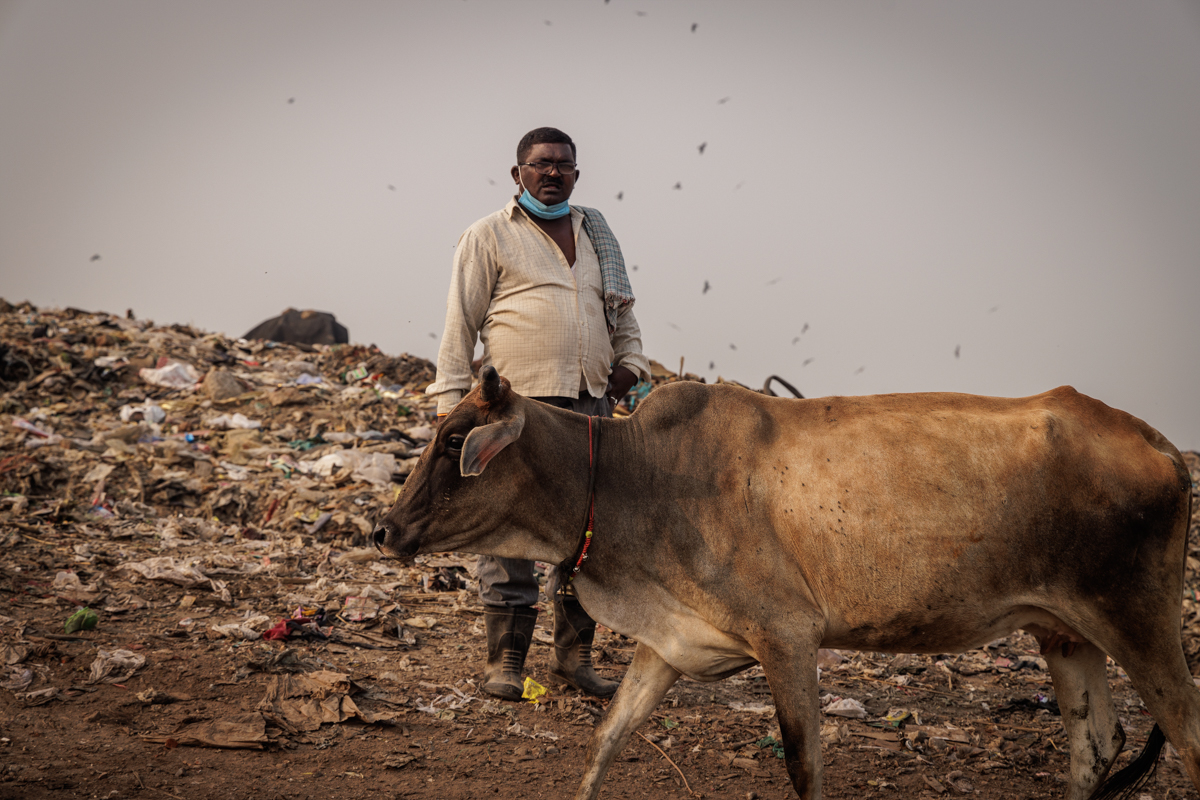
A man guides a cow along a flattened stretch near the top, birds circling overhead. Dogs move through the waste with the same ease as the workers — navigating terrain that shifts and collapses without warning. Deadly landslides are common here. So are trash fires, which can burn underground for days before breaking the surface.
Near the edge, a woman sits with her back to the mountain, looking out over the colony. The red of her clothing is the only sharp color in the frame. Everything else — the sky, the buildings, the haze — dissolves into the same muted brown. She is still. The city moves below her.
She is still. The city moves below her.
The descent leads back into the colony — a settlement built directly against the landfill's base. The streets are narrow and unpaved, running with standing water and waste runoff. Wires tangle overhead. Men sort through enormous bags of collected material at the edges of the road, the day's haul being weighed and priced.
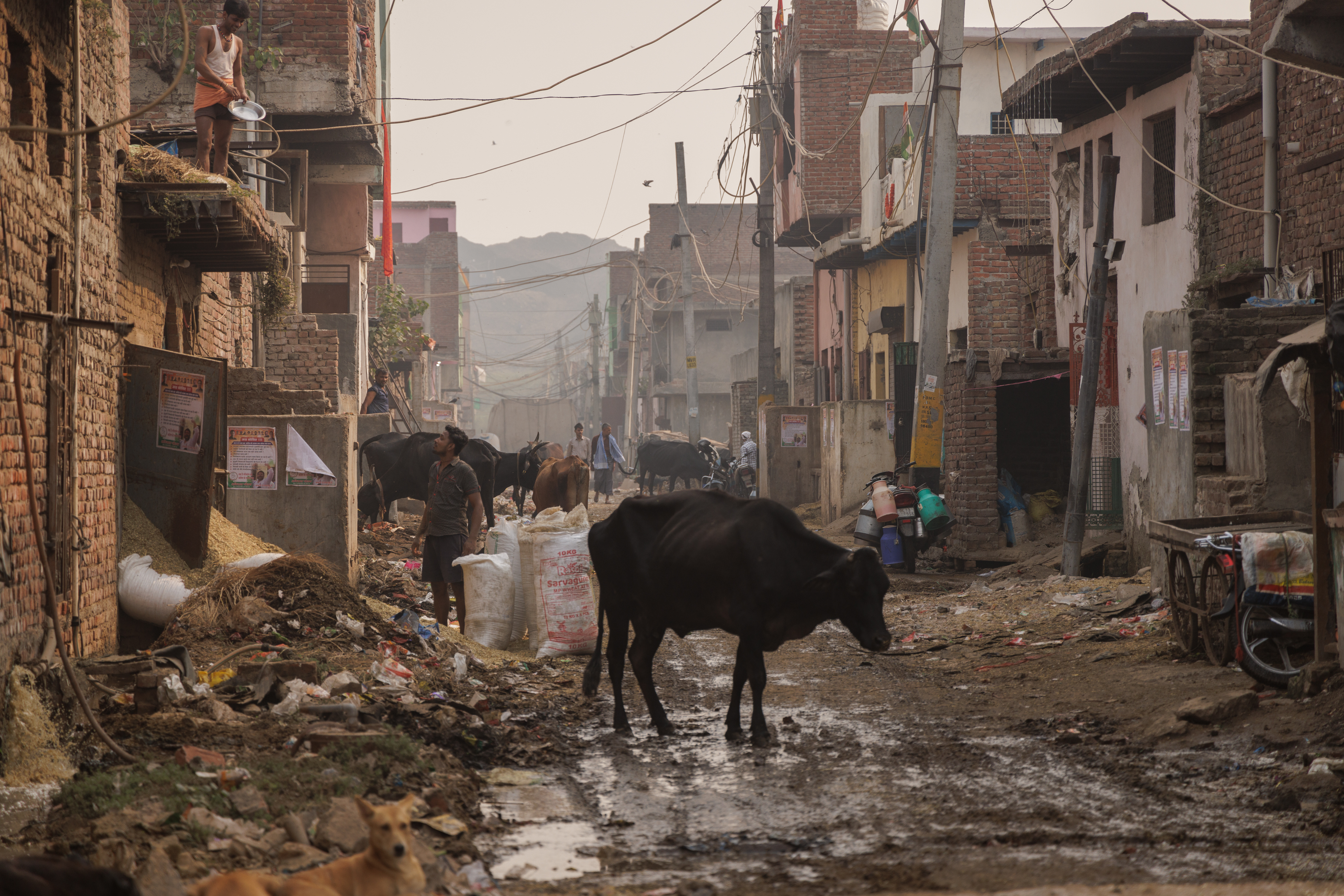
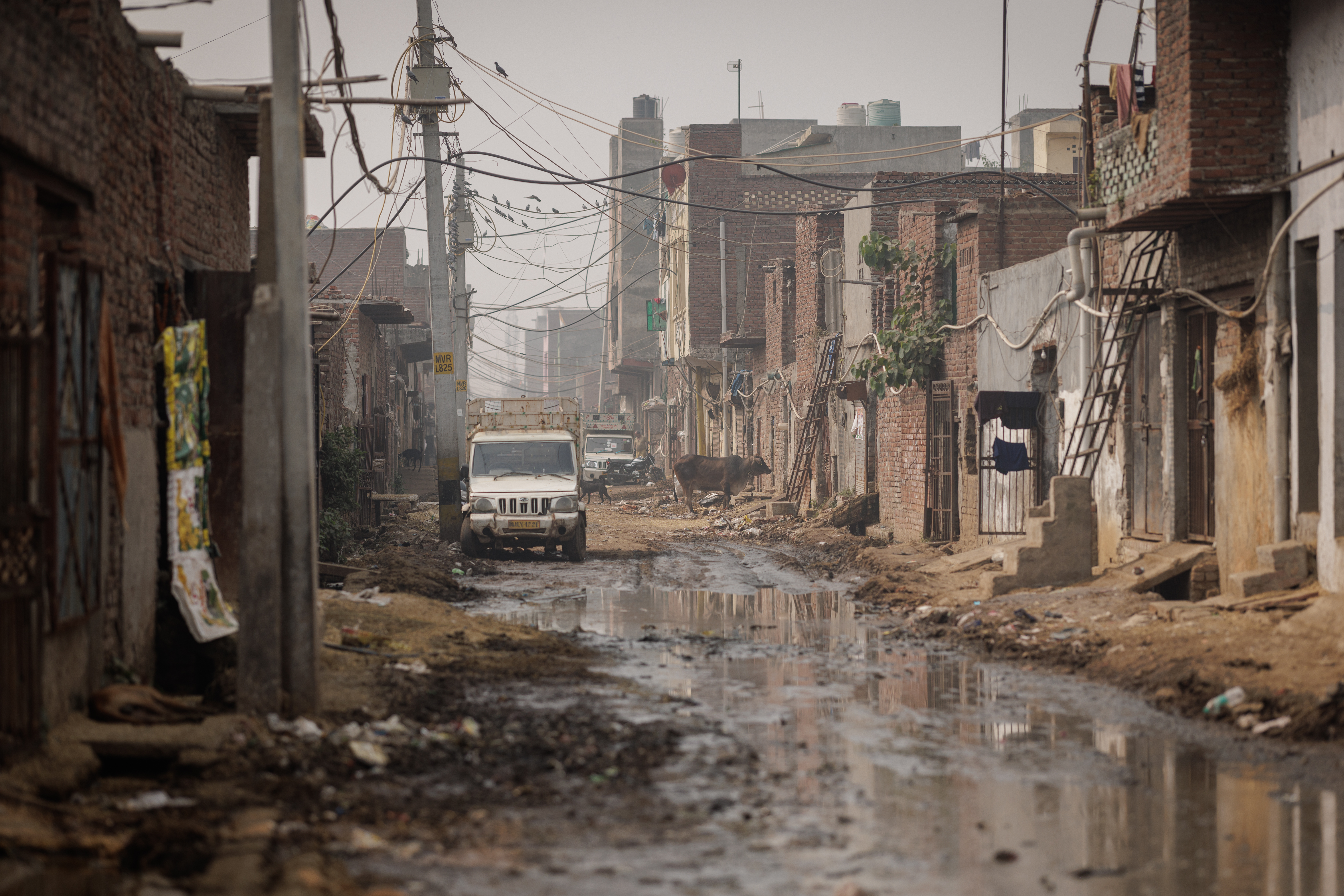
Life expectancy here is around forty years. The pollution is constant — airborne particulates, leachate seeping into groundwater, methane venting from the decomposing mass above. The health consequences are documented but unchanged. The colony persists because the landfill is both the poison and the livelihood.
In the lanes between the houses, men guide water buffalo through standing water. Cattle are raised here alongside the waste — another layer of livelihood pressed into the same narrow ground. The animals move through the colony the same way the trucks move through the landfill above: steady, unhurried, part of a rhythm that doesn't stop.
But none of it makes the people here closed or hardened. Walking up the steps into a brick home at the base of the dump, I was offered a seat, food, and an overwhelming warmth I had done nothing to earn. Smiles across the colony were constant — not performed, not guarded, just present.
Alexander Carrigg is an American photographer and freelance journalist documenting issues of historical significance including political unrest, conflict, and humanitarian crisis. AlexanderCarrigg.com